- 020 3778 0973
- 078 1790 1473
- info@thestanlee.com
- Mon - Fri: 09:30 - 17:30

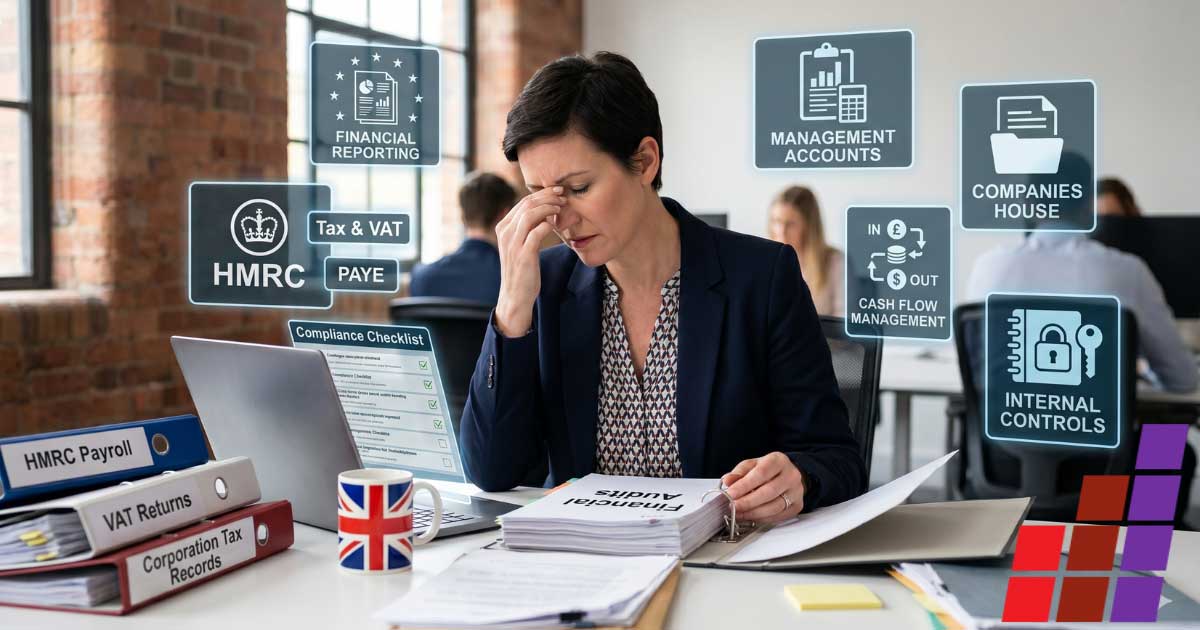
Running a small or medium-sized business in the UK involves far more than generating sales and managing operations. Today’s SMEs face increasing pressure to comply with tax regulations, employment laws, financial reporting standards, data protection rules, and industry-specific obligations. With regulatory frameworks constantly evolving, staying compliant has become one of the biggest operational challenges for business owners.
For many SMEs, compliance failures can lead to financial penalties, reputational damage, HMRC investigations, and unnecessary stress. Understanding the most common compliance issues can help businesses take proactive steps to avoid costly mistakes.
At Stan Lee Accountancy Ltd, we support UK businesses with practical accounting, tax, and compliance solutions that help them remain fully compliant while focusing on growth.
Compliance is not simply about avoiding fines. It helps businesses:
In an increasingly regulated business environment, compliance has become essential for long-term stability and success.
One of the biggest challenges UK SMEs face is keeping up with constantly changing HMRC requirements. Tax rules, filing deadlines, reporting obligations, and allowances frequently change, making it difficult for business owners to stay informed.
Common issues include:
The introduction of Making Tax Digital (MTD) has also increased the need for digital accounting systems and accurate real-time reporting.
Businesses that fail to comply with HMRC regulations may face penalties, interest charges, or investigations.

VAT remains one of the most complex areas for many SMEs. Businesses often struggle to determine:
Errors in VAT reporting are common and can quickly attract HMRC attention. Businesses operating internationally or selling digital services often face even greater complexity.
Working with experienced accountants can help SMEs reduce VAT risks and improve reporting accuracy.
Managing payroll is no longer just about paying employees on time. UK employers must comply with several payroll and employment regulations, including:
Payroll mistakes can result in penalties, employee disputes, and reputational damage. SMEs without dedicated HR or payroll departments are especially vulnerable to compliance errors.
Outsourcing payroll management is becoming increasingly popular among SMEs looking to reduce risk and improve efficiency.
Accurate record-keeping is a legal requirement for UK businesses, yet many SMEs still rely on disorganised spreadsheets, paper receipts, or incomplete systems.
Poor financial records can create several problems:
Digital accounting software has made compliance easier, but many SMEs still fail to maintain consistent bookkeeping practices.
Maintaining organised records throughout the year is essential for compliance and informed business decisions.
With increasing digitalisation, SMEs must comply with UK data protection laws, including the UK GDPR and Data Protection Act.
Common compliance challenges include:
Many SMEs underestimate cybersecurity risks due to limited budgets or lack of internal expertise. However, data breaches can result in significant financial penalties and loss of customer trust.
Businesses should regularly review their cybersecurity policies and ensure proper staff training.
Making Tax Digital continues to reshape the UK tax system. SMEs are increasingly required to maintain digital records and use compatible software for tax submissions.
Challenges businesses face include:
Businesses that delay adapting to MTD requirements may face compliance difficulties as regulations continue to expand.
Professional guidance can make the transition smoother and help businesses remain fully compliant.
Many SMEs struggle to maintain healthy cash flow while also meeting financial reporting obligations.
Late payments, rising operational costs, and economic uncertainty often create pressure on small businesses. Without proper financial oversight, businesses may:
Regular management accounts and financial forecasting can help SMEs improve visibility and reduce compliance risks.
Some sectors face additional regulatory obligations beyond standard accounting and tax compliance.
For example:
SMEs operating in regulated industries often struggle to keep pace with evolving rules and reporting obligations.
Seeking professional compliance support is essential for avoiding sector-specific risks.
Although compliance can feel overwhelming, businesses can significantly reduce risk by implementing practical systems and professional support.
Key strategies include:
Proactive compliance management is far more cost-effective than resolving issues after penalties or investigations arise.
At Stan Lee Accountancy Ltd, we help SMEs navigate complex compliance requirements with confidence. Our experienced team provides tailored support in:
We work closely with businesses across the UK to simplify compliance and help owners focus on growing their companies.
Final Thoughts
Compliance challenges are becoming increasingly complex for UK SMEs, particularly as regulations evolve and digital reporting requirements expand. Businesses that fail to prioritise compliance may face financial penalties, operational disruption, and reputational damage.
However, with the right systems, technology, and professional support, SMEs can manage compliance effectively and build a stronger foundation for long-term growth.
Partnering with experienced accountants can make a significant difference in reducing compliance risks and improving overall business performance.
Looking for our accounting services?
EXCELLENTTrustindex verifies that the original source of the review is Google. Amazing service! Couldn’t suggest a better one. Muhammad has always been available on every step and took time to explain in details every process.Posted on GoogleTrustindex verifies that the original source of the review is Google. Very quick and transparent service! Thanks Solaiman for giving all the time to explain all of the queries and educating me. Highly recommended !Posted on GoogleTrustindex verifies that the original source of the review is Google. Professional, reliable, and always accurate, they manage our accounting with precision and ease. They make financial processes straightforward and consistently provide clear, timely advice. Highly recommended.Posted on GoogleTrustindex verifies that the original source of the review is Google. I recently started using Stan Lee for my accounting, and so far it’s been awesome. They’re super helpful, easy to talk to, and really know what they’re doing. Everything’s been smooth and stress-free, which I really appreciate. Looking forward to working with them more!Posted on GoogleTrustindex verifies that the original source of the review is Google. Very Efficient and Effective Accountant. Solaiman has excellent communication and his been working with us for over 2 years. Highly Recommended!!!Posted on GoogleTrustindex verifies that the original source of the review is Google. Amazing Accountants, Very Professional and cater to all my needs. Highly RecommendedPosted on GoogleTrustindex verifies that the original source of the review is Google. We are incredibly grateful for the outstanding service provided by Stanly & Co. From the moment they took us on as a client, they demonstrated remarkable diligence and efficiency. Their professionalism was evident in the way they promptly requested the necessary details, evidence, and documents to ensure our accounts were handled accurately, especially when we required an external verifier. Their expertise and commitment to excellence have given us complete confidence in their work. We highly recommend Stanly & Co to any business seeking a reliable and professional accounting firm. We look forward to a long and successful partnership with them.Posted on GoogleTrustindex verifies that the original source of the review is Google. Excellent accountancy service. Always available and willing to go the extra mile. I will be using them for all my future needs!Posted on GoogleTrustindex verifies that the original source of the review is Google. Mr. Mohammad, FCCA, helped me form a company, register for a tax code, and go through the self-employment process. He gave me valuable advice. Truly professional and highly recommended.Posted on GoogleTrustindex verifies that the original source of the review is Google. Muhammad worked on my tax assessment for the 2023-2024 year. He is incredibly helpful, explains everything in detail, and organised. He takes away the burden of filing taxes from you. I would highly recommend Stan Lee!

We are required by our professional bodies to have separate entity and therefore, there are two firms involved. Both firms are required to have Professional Indemnity Insurance (details of the PII available in our office upon request).
Registered Office: Level 18 | 40 Bank Street | Canary Wharf | London | E14 5NR
© All rights reserved 2019 - 2026
| Cookie | Duration | Description |
|---|---|---|
| cookielawinfo-checkbox-analytics | 11 months | This cookie is set by GDPR Cookie Consent plugin. The cookie is used to store the user consent for the cookies in the category "Analytics". |
| cookielawinfo-checkbox-functional | 11 months | The cookie is set by GDPR cookie consent to record the user consent for the cookies in the category "Functional". |
| cookielawinfo-checkbox-necessary | 11 months | This cookie is set by GDPR Cookie Consent plugin. The cookies is used to store the user consent for the cookies in the category "Necessary". |
| cookielawinfo-checkbox-others | 11 months | This cookie is set by GDPR Cookie Consent plugin. The cookie is used to store the user consent for the cookies in the category "Other. |
| cookielawinfo-checkbox-performance | 11 months | This cookie is set by GDPR Cookie Consent plugin. The cookie is used to store the user consent for the cookies in the category "Performance". |
| viewed_cookie_policy | 11 months | The cookie is set by the GDPR Cookie Consent plugin and is used to store whether or not user has consented to the use of cookies. It does not store any personal data. |